
1. Basic Principles
CNC Turning
Turning principle: workpiece rotates while tool moves linearly. The tool moves axially or radially to remove material from the rotating workpiece, creating surfaces of revolution.
Equipment: CNC Lathe, Turning Center (with live tooling for milling)
CNC Milling
Milling principle: tool rotates while workpiece moves linearly or along curves. The rotating multi-flute cutter cuts the fixed or moving workpiece to create planes, curved surfaces, grooves, and cavities.
Equipment: Vertical Machining Center (VMC), Horizontal Machining Center (HMC), 5-Axis Machining Center, Gantry Milling Machine
2. Suitable Part Types
Parts Suitable for Turning
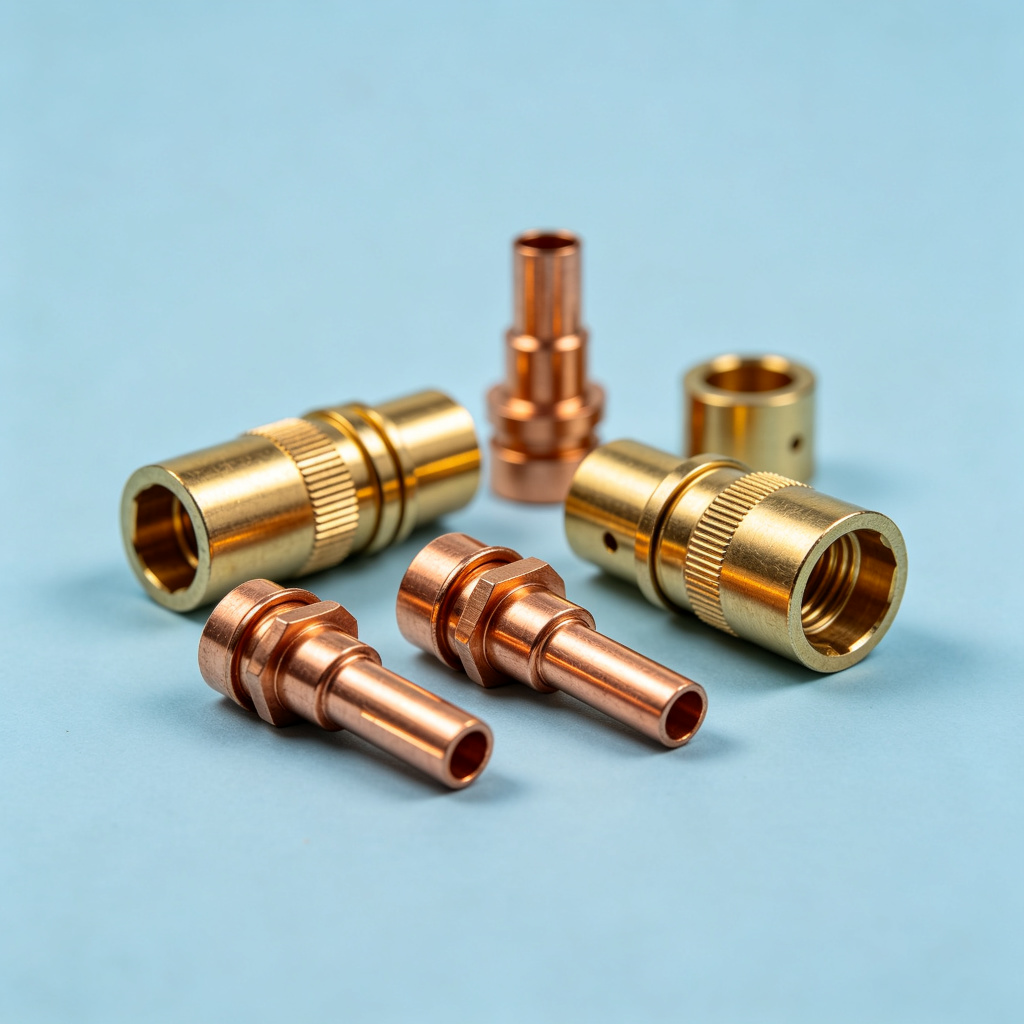
- Shafts: Transmission shafts, pins, lead screws, worms, spindles
- Discs and sleeves: Flanges, end caps, bushings, bearing housings, gear blanks
- Threaded parts: Bolts, nuts, lead screws, threaded connectors
- Spherical/conical parts: Ball ends, taper sleeves, nozzles
- Rotational curved surfaces: Handles, cams, complex revolution surfaces
Common feature: Main surfaces are surfaces of revolution — rotationally symmetric around a central axis.
Parts Suitable for Milling
- Box-type parts: Gearbox housings, engine blocks, pump bodies, valve bodies
- Plate/disc parts: Panels, cover plates, flanges with non-rotational features
- Mold parts: Injection molds, stamping dies, die-casting mold cavities and cores
- Complex curved surfaces: Impellers, blades, propellers, humanoid joints
- Grooves/cavities: Guide rails, T-slots, keyways, complex cavities
- Multi-hole parts: Parts requiring drilling, reaming, boring of multiple holes
Common feature: Contains planes, curved surfaces, grooves, cavities, hole systems — non-rotational features, or requires multi-face machining.