
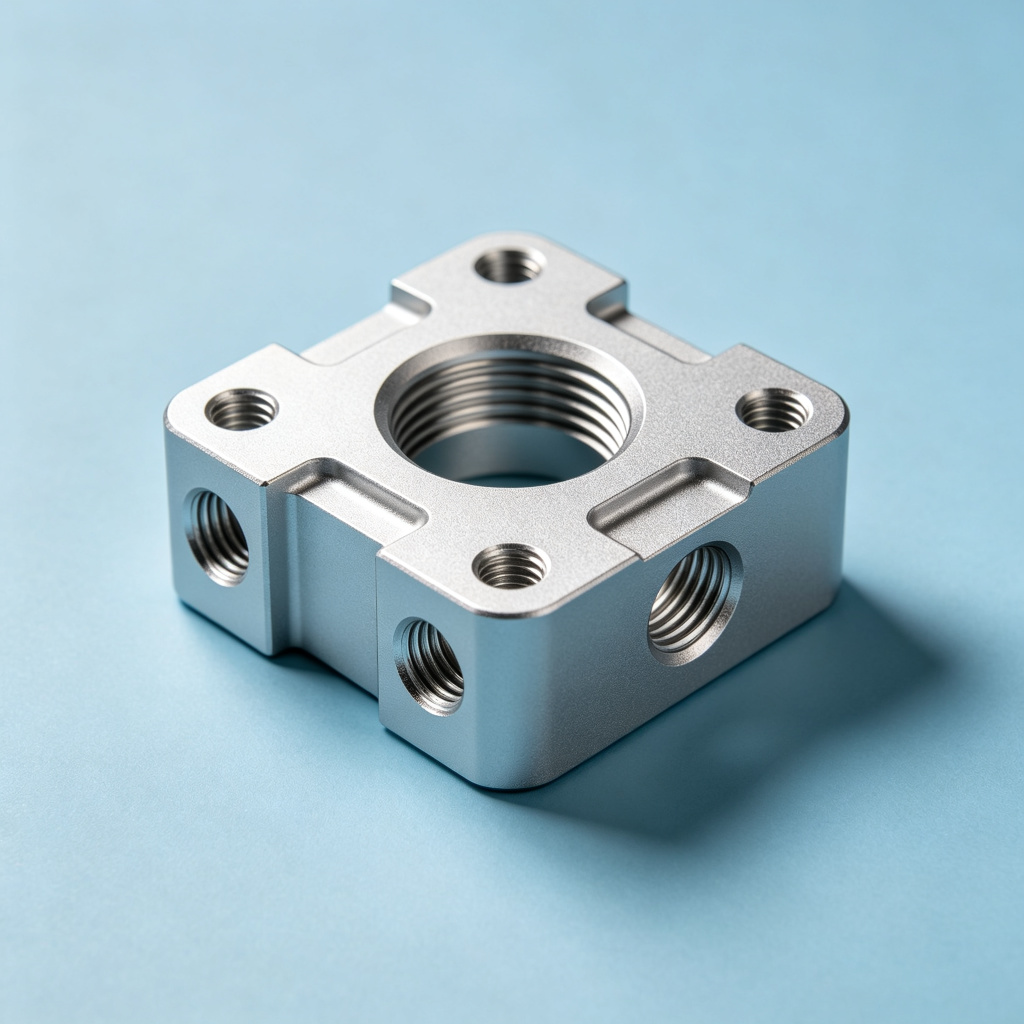
1. Basic Concepts of CNC Machining Precision
CNC machining precision refers to the deviation between actual and theoretical dimensions, expressed as tolerance. Common precision levels include:
- Standard precision (±0.1mm ~ ±0.05mm): For general structural parts, housings, brackets.
- Medium precision (±0.05mm ~ ±0.02mm): For transmission parts, connectors, fixtures.
- High precision (±0.02mm ~ ±0.005mm): For molds, gauges, precision instruments, medical devices, aerospace parts.
- Ultra-precision (below ±0.005mm): Requires precision grinding and lapping, for optical components and precision bearings.
2. Key Factors Affecting Machining Precision
Machine Tool Accuracy
The positioning accuracy and repeatability of the CNC machine form the foundation. High-end imported machines (DMG MORI, Mazak) can achieve ±0.003mm positioning accuracy, while standard domestic machines typically achieve ±0.01mm.
Tooling Factors
Tool wear, runout, and rigidity directly affect dimensional accuracy. For finishing, use new or preset tools with runout controlled within 0.002mm.
Material Factors
Different materials have vastly different machining characteristics. Aluminum machines well but has high thermal deformation; stainless steel work-hardens severely; titanium has poor thermal conductivity; hardened steel requires CBN or ceramic tools for hard turning.
3. Practical Methods to Improve Precision
Stage Machining to Eliminate Stress Deformation
For high-precision parts, perform aging treatment after roughing to relieve internal stress before finishing. This is especially critical for long shafts and thin plates prone to deformation.
Control Cutting Heat
Thermal expansion from cutting heat is a major source of precision error. Use ample cutting fluid, optimize cutting parameters, and minimize cutting depth during finishing.
Tool Compensation and In-Process Measurement
Use tool length and radius compensation, regularly measure parts in-machine and adjust compensation values — this is the most effective way to maintain precision consistency in batch production.
4. How to Choose the Right Precision Level
Higher precision means higher cost and longer lead time. Follow the "just enough" principle: appearance and structural parts need only ±0.1mm; general assembly parts ±0.05mm; transmission fitting parts ±0.02mm; precision fits and molds ±0.01mm to ±0.005mm.
When specifying tolerances on drawings, clearly mark critical dimensions only. Avoid specifying high precision for all dimensions, which leads to unnecessary cost increases.